Dogs sleep in all sorts of quirky positions, from curling up into a tight ball to sprawling out on their backs with their legs in the air. But did you know that the way your dog sleeps can reveal a lot about their personality, comfort, and even their health? In this post, we’ll explore the most common dog sleeping positions and what they might mean for your furry friend.
Table of Contents
Common Dog Sleeping Positions and Their Meanings
1. The Curled-Up Ball
This position, where the dog tucks their legs under their body and curls their tail around, is one of the most common. It helps retain body heat and protects vital organs, which is why dogs in colder climates often sleep this way.
👉 What It Means: Your dog might be feeling cautious or just trying to stay warm. This is a natural, instinctive position that makes them feel safe.
2. The Side Sleeper
When your dog sleeps on their side with their legs extended, it usually means they feel safe and comfortable in their environment.
👉 What It Means: This is a sign of a relaxed and content pup. Side sleepers tend to be affectionate and have strong bonds with their owners.
3. The Superman (Belly Down, Legs Stretched Out)
Often seen in playful or energetic dogs, this position allows for quick movement if they need to jump up suddenly.
👉 What It Means: Your dog is likely very active and playful. Puppies often sleep like this because they’re always ready to spring into action.
4. The Donut (Head Resting on Paws)
This position resembles a donut shape, with the dog’s nose tucked into their belly or resting on their paws.
👉 What It Means: This position can indicate that your dog is conserving body heat and possibly feeling a little insecure.
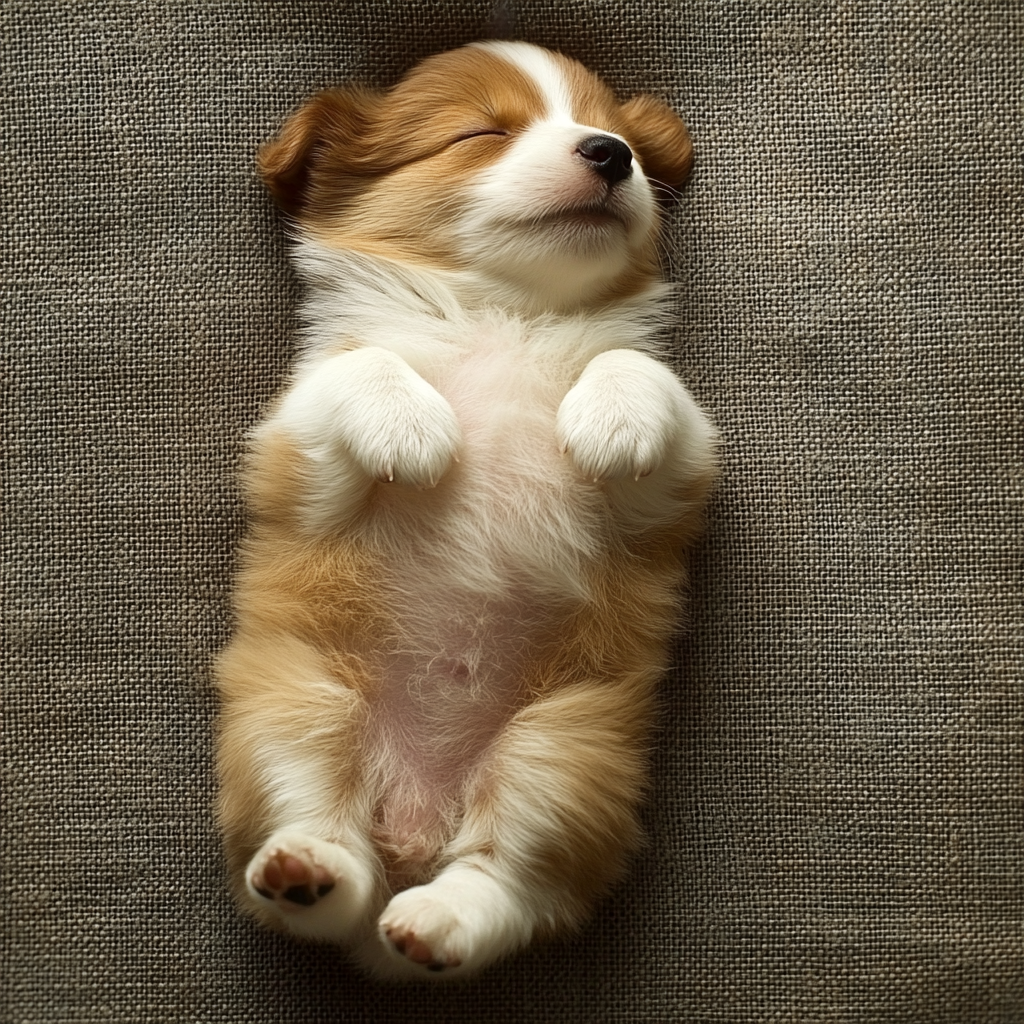
5. The Belly-Up Sprawl (Lying on Back, Legs in the Air)
This is one of the funniest and most vulnerable sleeping positions dogs take. It exposes their belly and shows complete trust in their surroundings.
👉 What It Means: Your dog is relaxed, comfortable, and completely at ease in their environment. This position also helps them cool down on warm days.
6. The Snuggle Sleeper (Sleeping Against You or Another Dog)
Dogs that sleep cuddled up against their owners or other pets are seeking warmth and security.
👉 What It Means: Your dog craves affection and feels deeply bonded with you.

FAQs About Dog Sleeping Positions
Q: Is my dog’s sleeping position related to their health? A: In some cases, yes! A dog that suddenly changes sleeping positions or seems uncomfortable might be experiencing pain or health issues. If you notice a sudden change, it’s best to consult your vet.
Q: Why does my dog twitch or move while sleeping? A: Just like humans, dogs go through REM sleep, which can cause twitching, barking, or even running movements. This is completely normal and means your dog is having an active dream.
Q: Should I be concerned if my dog sleeps too much? A: Dogs sleep an average of 12-14 hours a day, but puppies and older dogs may sleep even longer. If your dog seems excessively lethargic or their sleeping patterns change suddenly, check with your veterinarian.

Conclusion
Your dog’s sleeping position is more than just a cute pose—it provides insight into their mood, comfort level, and even personality traits. By paying attention to how your furry friend snoozes, you can better understand their needs and ensure they are happy and healthy.
Helpful Notes:
- Ensure your dog has a comfortable bed suitable for their size and sleeping style.
- If your dog suddenly changes their sleeping position or seems restless, it could indicate discomfort or a health issue.
- Dogs, like humans, need quality sleep for good health, so make sure their sleeping environment is quiet and cozy.
By understanding your dog’s sleeping habits, you can provide them with the best care possible—ensuring they wake up happy and refreshed every day!